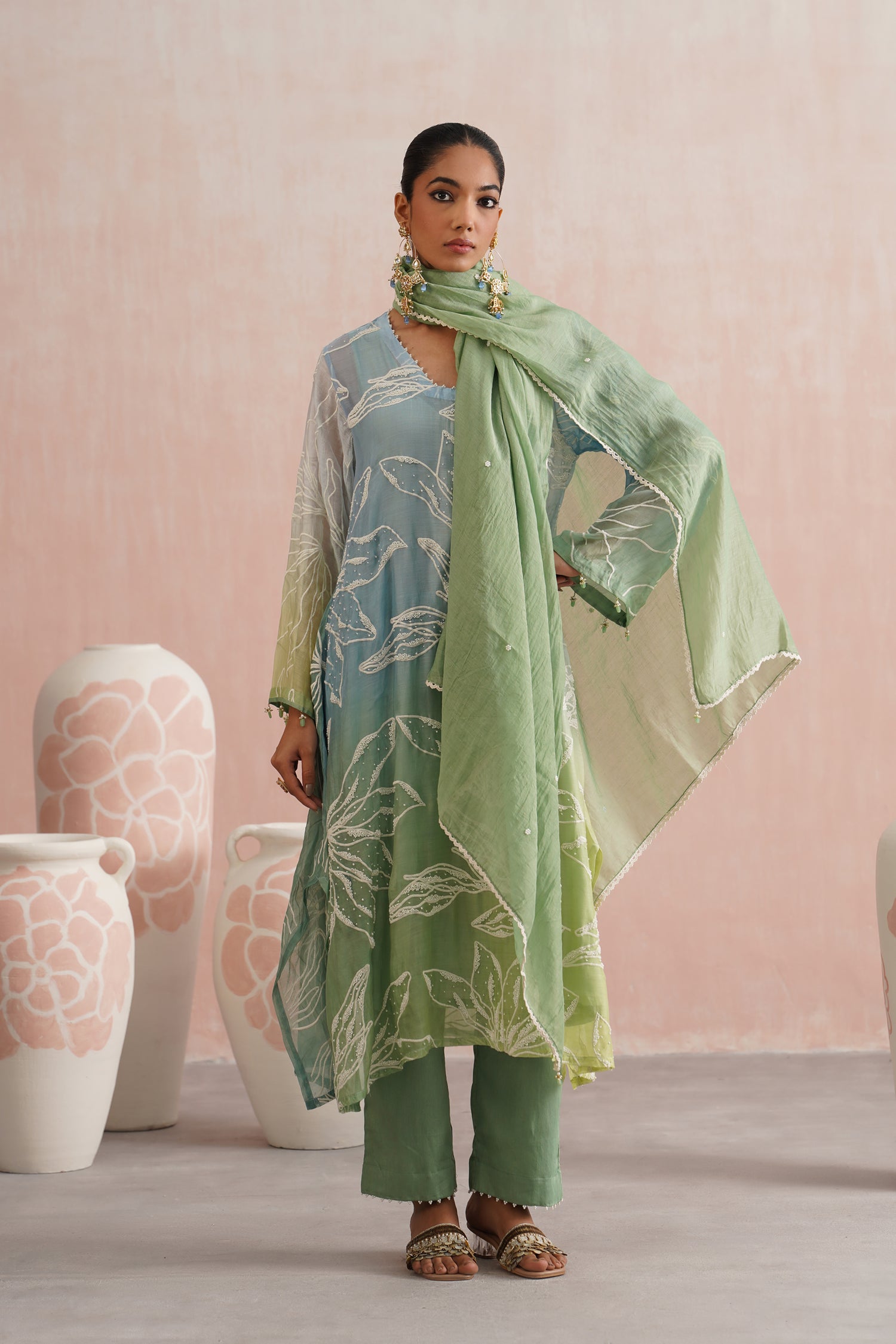

How Floral Motifs Became a Signature in Indian Festive Dressing

Floral motifs have long held a special place in Indian textiles and festive clothing. Across centuries of craft traditions, flowers have appeared in weaving, embroidery, painting and printmaking. Today, they remain one of the most recognisable visual elements in Indian occasion wear. Whether delicate and scattered or intricately embroidered, floral motifs continue to bring softness, elegance and a sense of celebration to garments.
What makes florals so enduring is their ability to adapt. They can appear regal or understated, traditional or contemporary, depending on how they are interpreted. For designers working with festive clothing, florals offer a vocabulary that feels familiar while still allowing endless room for reinvention.
The Historical Roots of Floral Motifs
 The prominence of florals in Indian textiles can be traced back several centuries. During the Mughal period, botanical imagery became a defining element of art and design. Mughal gardens, miniature paintings and architectural carvings often featured carefully observed flowers such as lotuses, irises, tulips and roses.
These botanical studies gradually made their way into textiles through embroidery and block printing. Artisans translated the symmetry and delicacy of garden layouts into repeating patterns on fabric. The influence of these designs continues to shape Indian clothing even today.
Many traditional embroidery techniques, including zardozi and fine threadwork, evolved to incorporate these floral forms. Over time, these motifs became closely associated with celebration and occasion dressing. Their natural elegance made them ideal for garments worn during weddings, festivals and important family gatherings.

Why Florals Work So Well for Festive Clothing
Festive dressing often aims to balance beauty with approachability. Floral motifs achieve this balance effortlessly. They feel decorative and detailed while remaining soft and organic.
Unlike geometric patterns, which can appear more structured, florals introduce movement and fluidity into a garment. Even a small embroidered flower can create visual interest without overwhelming the design. This allows the outfit to feel festive while maintaining a sense of ease.
Floral patterns also work beautifully across different fabrics. On lighter textiles such as mul Chanderi or Chanderi silk, they appear delicate and airy. On richer fabrics, they can look more opulent and ornate. This versatility is one of the reasons floral motifs have remained relevant across generations of festive wear.
Floral Motifs in Contemporary Festive Collections
While floral designs have deep historical roots, modern designers often reinterpret them in subtle ways. Instead of extremely dense embroidery, many collections today favour lighter placements and softer colour palettes.
This approach allows garments to remain wearable beyond a single occasion. Florals become part of a design language that feels festive without being overly heavy.

In pieces like the Roselle Set, floral expression appears through delicate appliqué work and pearl-embellished detailing on the dupatta, rather than overwhelming the base garment. The mul Chanderi kurta remains relatively minimal, allowing the floral elements to feel airy and intentional.
This balance, where florals are present but not overpowering, is what makes contemporary festive wear feel lighter, more refined, and easier to return to across different occasions.
The Influence of Nature in Textile Design
One reason floral motifs remain so popular is their strong connection to nature. Flowers symbolise growth, renewal and celebration across many cultures. In Indian traditions, they are closely associated with rituals, weddings and festive decorations.
This symbolic connection makes floral designs feel particularly appropriate for celebratory clothing. Wearing garments that echo natural forms subtly reinforces the sense of joy and renewal that accompanies festive occasions.
At the same time, floral motifs offer designers an opportunity to experiment with scale and interpretation. A collection may feature tiny scattered blossoms on one garment and larger embroidered motifs on another. Both variations can exist within the same design language while offering different visual experiences.
Balancing Tradition and Modernity
One of the reasons florals continue to define Indian festive dressing is their ability to bridge tradition and modernity. They carry the memory of historical textile practices while remaining adaptable to contemporary aesthetics.
Today’s festive garments often focus on lighter silhouettes, breathable fabrics and thoughtful embroidery placement. Florals adapt naturally to this shift. When executed with restraint, they can enhance a garment without making it feel overly formal or heavy.

Designs like the Dahlia Set, where floral-inspired embroidery is integrated subtly across a relaxed silhouette, show how traditional decorative techniques can coexist with modern styling. The motifs feel detailed yet understated, allowing the outfit to retain its festive character while remaining easy and wearable across different settings.
A Motif That Continues to Evolve

Floral motifs have travelled through centuries of Indian design, appearing in everything from handwoven textiles to contemporary festive collections. Their enduring popularity lies in their flexibility. They can be romantic or structured, minimal or ornate, depending on how they are interpreted.
For festive clothing in particular, florals bring a sense of softness that complements the joy of celebration. They allow garments to feel decorative without appearing overly heavy, making them ideal for occasions that blend tradition with modern lifestyles.
As designers continue to reinterpret Indian craft traditions, floral motifs will likely remain at the heart of festive dressing. Not simply because they are beautiful, but because they carry a long and meaningful history within Indian textile culture.