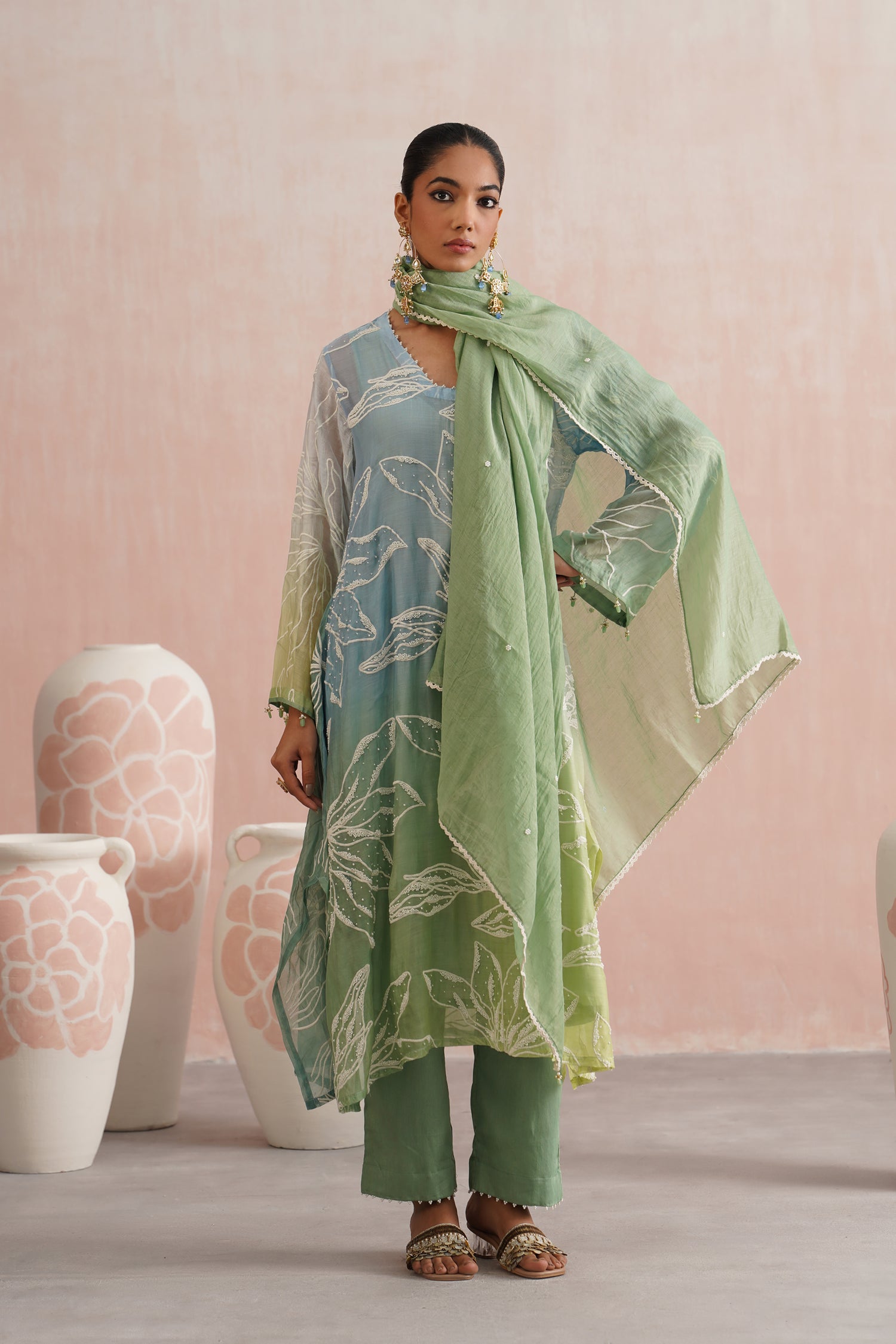

From Fabric to Finished Garment: What Actually Goes Into Making an Embroidered Set
 Shop now Aarzoo Set
When you look at an embroidered outfit, what you notice first is the final moment, the way it catches light, the softness of the silhouette, the quiet detail in every motif.
What you don’t see is how many decisions it took to get there.
An embroidered set doesn’t begin with thread or embellishment. It begins much earlier, with an idea. And from that point on, every step shapes not just how the garment looks, but how it feels to wear, move in, and return to over time.
At Ugna by Unnati, that journey is layered, intentional, and deeply hands-on.
Where It Begins: Inspiration and Direction
Every piece starts with a mood.
Sometimes it’s drawn from nature, florals, fading colours, soft symmetry. Sometimes from memory, heirloom textiles, old techniques, or the way certain garments were worn and lived in.
These references come together as moodboards, helping define not just the aesthetic, but the feeling of the collection. Is it soft and romantic? Structured and refined? Light and celebratory?
Before anything tangible exists, the direction is already clear.
Building the Foundation: Fabric Comes Next
Once the visual language is defined, the next step is choosing the fabric that can carry it.
This decision is less about theory and more about experience. How does it fall? How does it feel after hours of wear? Does it hold detail lightly, or does it weigh it down?

 Shop now Ruhani
In pieces like the Ruhani Set or the Inaaya Set, the base fabric allows the garment to remain fluid and breathable, which becomes especially important for long celebrations or warmer settings. The fabric doesn’t compete with the embroidery, it supports it.
This is where the garment begins to take shape, not visually, but physically.

Translating Ideas: Khakha Making
Once the fabric direction is locked in, the design moves into something more precise.
This is where khakha making begins, the process of sketching and mapping out embroidery motifs.
These aren’t just drawings. They are detailed guides that determine placement, scale, spacing, and rhythm across the garment. Every motif is positioned with intention, keeping in mind how the outfit will sit on the body.
A neckline might carry denser work. Sleeves may be lighter. The hem might anchor the entire look.
This stage quietly decides how balanced and wearable the final piece will feel.

Colour Before Craft
Before embroidery begins, the colour palette is finalised.
This isn’t just about choosing a shade, but about understanding how different tones will interact, fabric, thread, pearls, metallic elements.
Once this is decided, the fabric goes through the dyeing process. The exact tone matters because it directly affects how the embroidery will appear. A softer base might call for muted golds or pearls, while a deeper tone might hold stronger contrast.
Only after this step do the khakhas move onto the fabric.

From Paper to Fabric: Khakha Placement and Printing
The sketched motifs are then transferred onto the dyed fabric.
This process ensures that every detail planned during the design stage is accurately placed. It acts as the blueprint for the artisans who will bring the embroidery to life.
At this stage, you begin to see the garment emerging, not in texture yet, but in structure.

Sampling: Where Decisions Become Real
Before full-scale embroidery begins, sampling plays a crucial role.
Different combinations are tested, pearls with sequins, dabka with threadwork, gold against rose gold, subtle contrasts versus tonal blends.
This is where refinement happens.


In pieces like the Nilambari Set or the Inaara Set, the final embroidery feels cohesive because these decisions have already been worked through during sampling. Nothing feels out of place or overly heavy.
It’s less about adding more, and more about knowing what to hold back.
The Craft of Hand Embroidery
Only after all of this does the actual embroidery begin.
This is where time slows down.
Artisans work through each motif carefully, following the khakha while also responding to the fabric. The way a thread sits, the way a pearl reflects light, the way tension is maintained, all of it matters.
 Shop now Rangrez Set
In the Rangrez Set, you can see this most clearly in close detail. The embroidery doesn’t sit on top of the fabric; it becomes part of it. It adds texture and depth without taking away from the lightness of the garment.
This stage is not rushed. It cannot be.
Because this is where the garment begins to feel alive.


Bringing It Together: Cutting and Stitching
Once the embroidery is complete, the fabric moves into construction.
This is where the garment is cut and stitched into its final form. And this step is just as important as the embroidery itself.
The silhouette needs to support the work that’s already been done. It needs to fall correctly, allow movement, and sit comfortably on the body.


In sets like the Feroza Set or the Dahlia Set, the construction feels effortless, not because it’s simple, but because it’s been carefully resolved. Nothing pulls, nothing feels stiff, and the garment moves naturally with you.
The Final Layer: Hand Finishing
Even after stitching, the process isn’t complete.
This is where the final hand detailing comes in, finishing edges, adding borders, refining dupattas, attaching small elements that complete the piece.
These are the details that aren’t always noticed immediately, but they’re felt.
They’re what make a garment feel finished.
More Than the Final Look
By the time an embroidered set is complete, it has moved through multiple hands, multiple decisions, and multiple stages of refinement.
What you see in the end is just one part of the story.
What you feel, the ease, the movement, the balance, comes from everything that happened before.
And that’s what makes certain pieces stay with you.
Not just because they’re beautiful, but because they were built to be worn, lived in, and returned to, long after the first occasion.