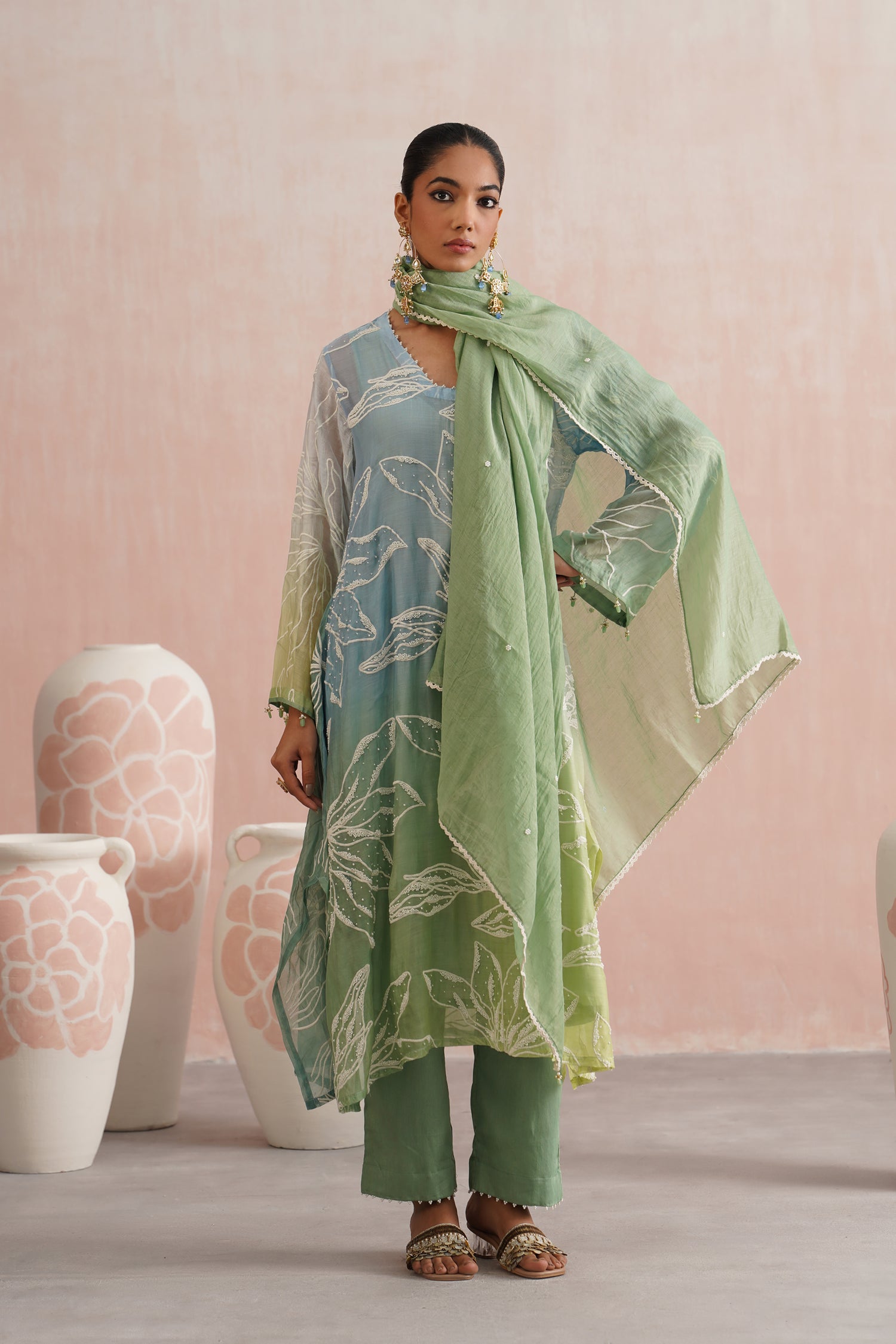

Chanderi vs. Cotton: Choosing What You’ll Actually Wear

When it comes to ethnic wear, the choice between Chanderi and cotton is rarely just about fabric. It’s about how an outfit feels through the day, how easily you can move in it, and whether you’ll reach for it again after the first wear.
Most people aren’t thinking in terms of weave or construction. What matters more is this:
Does it feel comfortable after a few hours?
Can it move from one setting to another?
Does it feel like you?
Looking at how different pieces are worn in real life makes this distinction much clearer.
When You Want Something Light, But Still Special

When You Want Something You Don’t Have to Think About
On the other hand, there are days when you just want something that works without effort. Something you can wear for hours, step out in, sit comfortably in, and not worry about too much.
That’s where cotton-based pieces come in, not as a “simpler” option, but as a more dependable one.
 Shop now Pakeezah Set
The Pakeezah Set is a good example of this. It feels easy from the start, something you can wear through the day without adjusting or overthinking. At the same time, it doesn’t feel too basic, which means it can still work for a mehendi or a small gathering when styled slightly differently.

Shop now Feroza Set Shop now Dahlia Set
Then there are sets like the Feroza Set and the Dahlia Set, which sit somewhere between casual and occasion wear. These are the outfits you can wear out for lunch, for a day event, or even for a relaxed evening plan. They don’t demand attention, but they still feel complete.
 Shop now Roselle Set
The Roselle Set also carries this kind of versatility. It feels intentional, but not overdone. You can wear it once and then reach for it again without feeling like it’s too recognizable or tied to a specific event.
This is where cotton works best, in pieces you can live in, not just wear once.
The Real Difference: How You Experience the Outfit

Instead of thinking about Chanderi and cotton as two opposing fabrics, it helps to think about how they show up in your day.
Some outfits feel like they’re made for moments. Others feel like they’re made for movement.
 Shop now Rani Set
 Shop now Inaaya Set
Chanderi pieces, like the Rani Set or Inaya Set, tend to fall into the first category. They feel slightly more elevated, which makes them ideal when you want to look put together without putting in too much effort.
 Shop now Pakeezah Set
 Shop now Dahlia Set
Cotton-led pieces, like the Pakeeza Set or Dahlia Set, fall into the second. They’re the ones you don’t have to plan around. You just wear them, and they work.
Neither is better. They simply serve different parts of your life.
Wearing Them Beyond One Occasion
What really defines a good outfit today is whether you can wear it again.

Shop now Ruhani Set
A set like the Ruhani Set can be styled with fuller jewellery for a function, and then worn more minimally for a dinner. The Firoza Set can move from a casual day out to a slightly dressier setting with just a change in accessories.
Shop now Zeenat Set
Even the more occasion-ready pieces, like the Zeenat Set, don’t feel restricted to one use. That’s what makes them valuable, not just how they look, but how often you can return to them.
Choosing What Works for You
The decision between Chanderi and Cotton doesn’t need to be technical. It can be as simple as asking:
- Do I want something that feels slightly more dressed up, or something I can wear without thinking?
- Do I need this for a specific moment, or for multiple days and settings?
- Do I want presence, or ease?
When you start looking at clothing this way, the choice becomes more intuitive.
Not a Choice Between Two, But a Balance
In reality, most wardrobes need both.
You need pieces like the Inaya Set or Rani Set for days that feel a little more special.
And you need pieces like the Pakeeza Set or Roselle Set for everything in between.
Because the best wardrobes aren’t built on occasions alone. They’re built on how often you actually wear what you own.
And that ultimately comes down to how a garment feels, not just what it’s made of.